01

Lexi Arden
Cultural Friction
Spots what others miss.
Reads the cultural risk, memory and meaning surrounding the decision.
Synthetic perspectives / real disagreement
The full room
Nobody attends by default. The decision determines who enters, what they are there to challenge, and when their perspective has done enough.
01
Cultural Friction
Spots what others miss.
Reads the cultural risk, memory and meaning surrounding the decision.
02

Unfinished Intent
Detects the questions nobody has fully asked yet.
Surfaces emotional signals and unfinished thinking before they disappear.
03

Commercial Realism
Sees the cost of being wrong.
Tests whether the recommendation can survive budget, timing and commercial reality.
04

Historical Memory
Recognizes patterns that have appeared before.
Reminds the Room what history is trying to teach.
05

Consequence
Looks beyond the next decision.
Keeps the room honest about second-order effects, unintended consequences and future regret.
06

Reality Stress
Tests what survives outside the room.
Pushes the idea against operational pressure, customer behavior and messy reality.
07

Emotional Truth
Finds what people are buying beneath the brief.
Reframes the decision around the human need underneath the stated brief.
08

Institutional Ritual
What ritual is being performed instead of a decision?
Reads hierarchy, deference and ritual agreement as visible operating evidence.
09

Contrarian Pressure
Challenges the answer the room agreed on too early.
Applies constructive skepticism before the market does it less politely.
10

The Missing Chair
Would anyone outside this room care enough to act?
Pulls the room back to the person who has to choose, pay for, use or ignore the thing.
Research faculty / additional perspectives

Executive Judgment
Clarifies the real decision, the stakes and what success must look like.
Synthesis & Governance
Separates evidence from assumptions.Ensures the Room reaches a coherent recommendation rather than a collection of opinions.
Legal Exposure
Identifies legal, ethical and regulatory risks before they become expensive.
Reputation
Watches trust move, and marks the moment credibility is being spent rather than earned.Tracks when confidence quietly leaves the room before anyone has named the loss.
Institutional Systems
Brings the perspective of governments, regulators and large institutions.
Execution Reality
Asks whether the recommendation can be produced, delivered and maintained.
Structural Depth
What is this decision really sitting on?Looks past the argument to the system beneath it: incentives, history, dependencies and accumulated debt.
Simple Truth
Leaves the Room with the observation that makes the pattern obvious.
Anthropology
The unofficial rules explain more than the official ones.Observes rituals, workarounds and discrepancies between stated values and everyday practice.
Maintenance Engineering
Everything works until someone stops maintaining it.Identifies maintenance burdens, dependencies and neglected failure modes.
Musical Chemistry
The timing changed before the conversation did.Notices coordination, listening, timing and recovery after mistakes.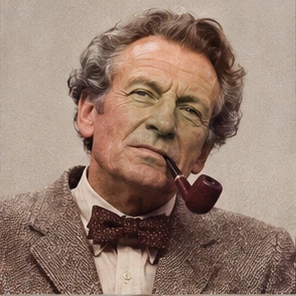
Archival Science
The missing record is often the most interesting one.Tracks lost context and distinguishes absent evidence from evidence of absence.
Attention Research
Interest left the room three minutes ago.Observes repetition, disengagement and avoidable cognitive load.
Experimental Physics
The control condition is missing.Proposes comparisons that separate effects from coincidence.
Cartography
The map ends before the territory does.Maps unexplored alternatives and boundaries of current knowledge.
Industrial Design
The extra part is doing no useful work.Finds unnecessary complexity and opportunities for simpler interfaces.
Ecology
Nothing changes in isolation.Traces interdependence, feedback loops and downstream effects.
Linguistics
Everyone used the same word for a different thing.Identifies semantic ambiguity and incompatible definitions.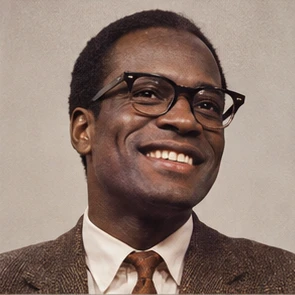
Theatre Direction
The scene changed when the quiet person spoke.Observes turn-taking, status and shifts in group dynamics.
Statistics
Precision is not the same as certainty.Distinguishes measurement, uncertainty and unsupported inference.
Logistics
The delay is hiding between two successful steps.Finds handoff friction, queues and bottlenecks.
Material Science
The stress concentrates at the joint.Identifies weak interfaces and conditions under which systems fail.
Field Observation
The ordinary detail is the clue.Records concrete anomalies before offering interpretations.
Economics
The incentive rewards the opposite behaviour.Examines tradeoffs and unintended incentives.
Restoration
Not everything old needs replacing.Distinguishes valuable inherited qualities from accumulated damage.
Serendipity Research
The accident produced a better experiment.Recognizes unexpected results worth investigating without mistaking coincidence for proof.Then the decision enters